
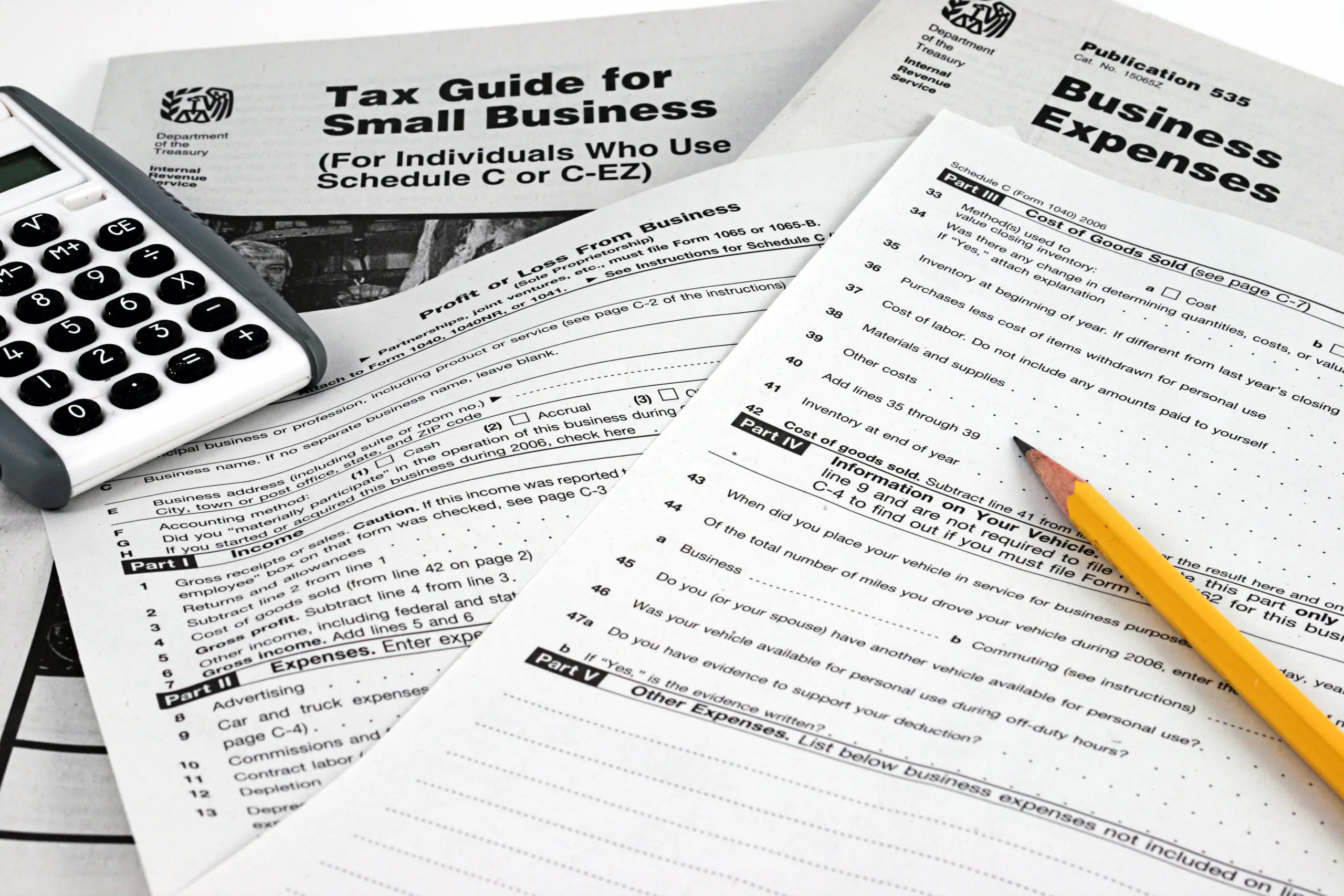
Most business owners have heard of the Section 179 deduction. Far fewer actually understand how it works, what’s changed for 2026, and how to use it strategically before the year runs out. If you’re buying, financing, or leasing equipment this year and you haven’t thought seriously about Section 179 yet, this guide is worth your time.
Here’s the plain-English version of what you need to know.
The Section 179 deduction is a tax provision that lets businesses write off the full purchase price of qualifying equipment in the year it’s placed into service, rather than depreciating it slowly over several years. Instead of getting a small deduction every year for five or seven years, you get the entire deduction in year one.
The practical impact is significant. Buy or finance a $100,000 piece of equipment in 2026, put it to work before December 31st, and you could potentially write off the full $100,000 on this year’s tax return. That reduces your taxable income dollar for dollar, which means real money back in the business depending on your tax bracket.
What makes the Section 179 deduction especially powerful for businesses using equipment financing is that the deduction applies to the full purchase price, even if you’re still paying it off in monthly installments. You finance the equipment, keep your cash working in the business, and still get to write off the entire cost in year one. That combination is why so many business owners time their equipment financing around this deduction.
The numbers got a meaningful boost in 2026, partly due to the One Big Beautiful Bill Act signed in July 2025 and annual inflation adjustments on top of that.
According to the current 2026 limits published on Section179.org, the maximum Section 179 deduction for 2026 is $2,560,000. The phase-out threshold starts at $4,090,000, meaning the deduction reduces dollar for dollar once your total qualifying equipment purchases for the year exceed that amount. It phases out completely at $6,650,000 in total purchases.
For most small and mid-sized businesses, these limits are more than enough to cover everything they’ll buy in a year. The deduction is really designed for the types of operations that are buying trucks, machinery, tools, and equipment regularly, which is exactly the profile of most businesses that use equipment financing.
Also worth knowing: for 2026, bonus depreciation is back at 100% for equipment placed into service between January 1 and December 31. Block Advisors’ 2026 Section 179 guide notes that bonus depreciation can be stacked on top of Section 179 for purchases that exceed the deduction limit, which gives larger buyers an additional tool to reduce their tax bill further.
The list is broad, which is part of what makes this deduction so useful for businesses across industries.
Business-essential equipment financed under the business is what Section 179 is built for. That covers most commercial equipment categories: trucks and commercial vehicles, construction and heavy equipment, manufacturing machinery, HVAC systems, restaurant equipment, forklifts, and trailers. The equipment needs to be used in and for the business, not for personal use, and it needs to be financed or purchased under the business entity.
A few things worth knowing on the vehicle side. Specialized commercial vehicles like semi trucks, dump trucks, cargo vans, and work trucks used exclusively for business typically qualify for the full deduction. Certain SUVs between 6,000 and 14,000 pounds GVWR are capped at $32,000 for Section 179, with the remainder depreciated normally. Any vehicle must be used more than 50% for business purposes to qualify, and clean mileage records will back that up if the IRS ever asks.
Used equipment qualifies too, as long as it’s new to your business and purchased from an unrelated party. This is a point a lot of buyers miss. A used forklift, a pre-owned semi, a second-hand skid steer, all of these can qualify for the full Section 179 deduction as long as they’re placed into service during the 2026 tax year and meet the other requirements.

This is the part that changes the conversation for a lot of business owners.
The Section 179 deduction applies to the full purchase price of the equipment, not just the portion you’ve already paid off. That means if you finance a $75,000 piece of equipment and put it into service in 2026, you can potentially deduct the full $75,000 this year even though you’re still making monthly payments on it. You get the tax benefit upfront while spreading the actual cost over time.
That’s a combination that’s hard to beat from a cash flow standpoint. You preserve working capital by financing, you get a predictable monthly payment, and you still get the full year-one tax deduction. For businesses that are already planning to buy equipment before year-end, this is exactly why it’s worth having the financing conversation sooner rather than later.
One important note: Section 179 is an election, not automatic. You have to actively claim it by filing IRS Form 4562 with your tax return. If you don’t elect it, you don’t get it. Talk to your accountant before you file, not after.
Timing is everything with Section 179. The equipment has to be placed into service, meaning actually operational and in use in your business, before December 31st of the tax year you’re claiming the deduction for.
That matters for equipment financing because approvals, funding, and delivery all take time. If you’re planning to use Section 179 for 2026, waiting until late November or December to start the financing conversation is cutting it close. Approvals can typically move in 24 to 48 hours for qualified buyers, but equipment delivery, installation, and getting something operational can take longer depending on what you’re buying.
The smarter move is to get prequalified now, know your budget and terms ahead of time, and be ready to move when you find the right piece of equipment. That way December 31st doesn’t sneak up on you with equipment still sitting in a warehouse waiting on delivery.
The businesses that get the most out of Section 179 are the ones who plan around it rather than react to it. If you know you’re going to need a truck, a piece of machinery, or a fleet addition in the next six months, financing it now and placing it into service before year-end gives you the deduction this tax year instead of next.
That’s a one-year acceleration of a deduction you were going to take eventually anyway, and depending on your tax situation, it can represent tens of thousands of dollars in real savings.
TrueCore Capital works with businesses across industries to structure equipment financing that takes the Section 179 timeline into account. Whether you’re buying trucks, construction equipment, restaurant equipment, or anything else your business runs on, getting prequalified now gives you the flexibility to move before the year-end deadline. And if you’re unsure whether same-day working capital or equipment financing is the right structure for your situation, we can walk you through both.
Find out what you qualify for today. Give us a call at (805) 422-7342 or submit a contact form below to get started — no hard pull, no pressure.



 July 5, 2024
 July 5, 2024
 July 5, 2024


 by Augustine Sung