
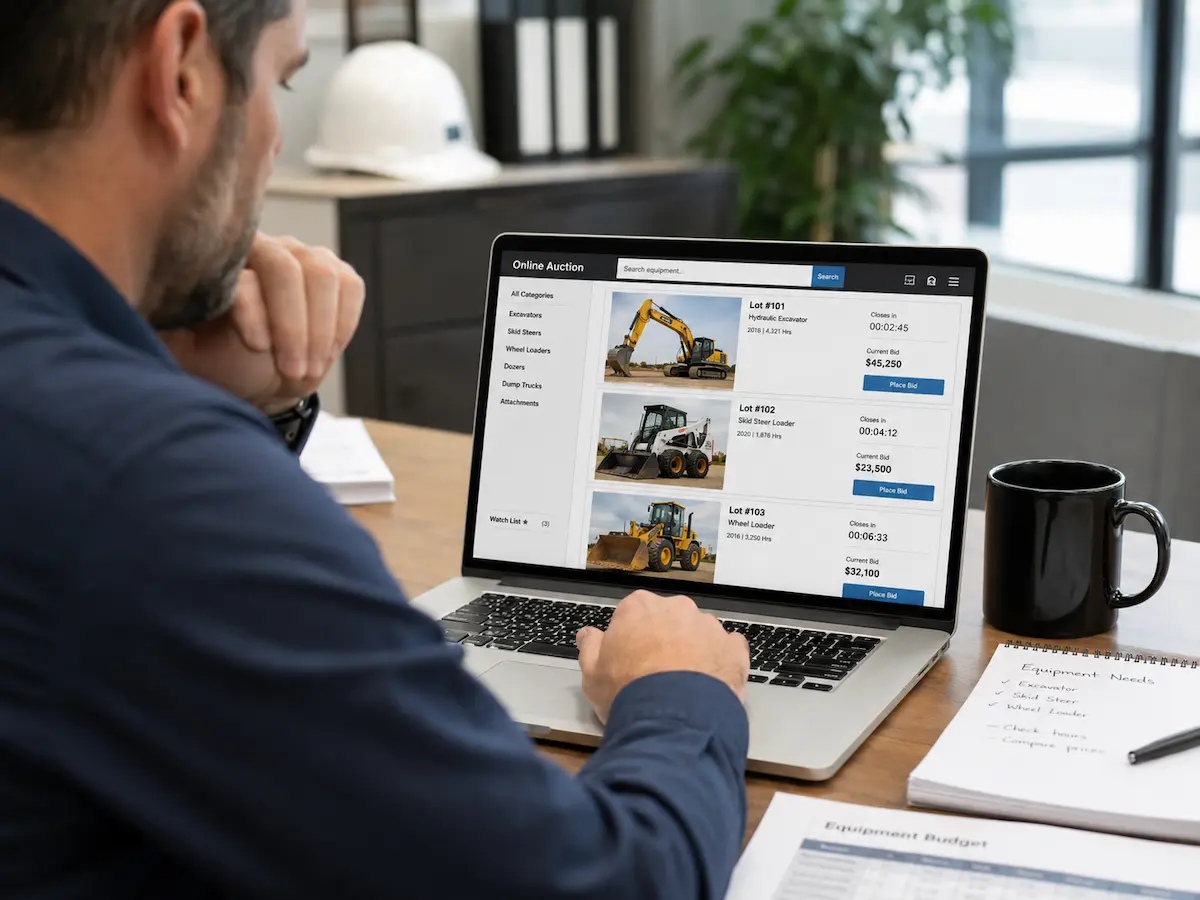
Auctions have become one of the smartest places to buy heavy equipment in 2026. Between no-reserve pricing, wide inventory, and online platforms that let you bid from anywhere, buyers who know how to navigate the process can land serious deals on tractors, trucks, skid steers, trailers, and more.
But here’s the part most first-time auction buyers don’t think about until it’s too late: winning the bid is only half the battle. Most auction platforms require payment in full — often within 24 to 72 hours of the auction closing. If you don’t have financing already lined up, you can lose the equipment you just won, forfeit your deposit, or get locked out of the platform entirely.
This guide breaks down exactly how auction equipment financing works, what lenders need from you, and how to set yourself up to bid with confidence — not anxiety. Whether you’re bidding on a tractor, a skid steer, or a commercial truck, the same rules apply: get your auction equipment financing sorted before the gavel falls.
The used equipment market has never been more active at the auction level. According to Mordor Intelligence’s 2026 used construction equipment market report, the global used construction equipment market is valued at over $132 billion in 2026 — and auction platforms are the fastest-growing sales channel, projected to expand at a 7% CAGR through 2031 as digital bidding continues to widen buyer pools and lower transaction costs.
That growth is showing up in pricing too. AgWeb recently reported that auction prices on top-end used farm equipment rose 12.5% in the first quarter of 2026 compared to the same period in 2025 — a clear sign that quality machines are in demand and buyers aren’t waiting around. When good equipment hits the block, it moves fast.
That’s exactly the environment where having your auction equipment financing in place before you bid isn’t just smart — it’s essential.
One of TrueCore Capital’s key auction partners is Fastline Auctions — a platform backed by over 45 years of experience in the agricultural community, connecting farmers, contractors, and equipment dealers across the country. Fastline runs regular online auctions featuring tractors, heavy duty trucks, trailers, excavators, skid steers, loaders, and more — with a straightforward format designed to move equipment fast and efficiently.
What makes Fastline a standout for TrueCore Capital clients is the speed and simplicity of their process. Their auctions are fully online, so you can bid from anywhere, and their inventory spans both agricultural and commercial equipment categories — meaning whether you’re a farmer looking to add a tractor or a contractor in the market for a skid steer or dump truck, there’s regularly something worth bidding on.
Because TrueCore Capital works directly with buyers on Fastline auctions, we can have your auction equipment financing lined up before bidding closes — so when you win, funds move fast and you’re not scrambling against a payment deadline.
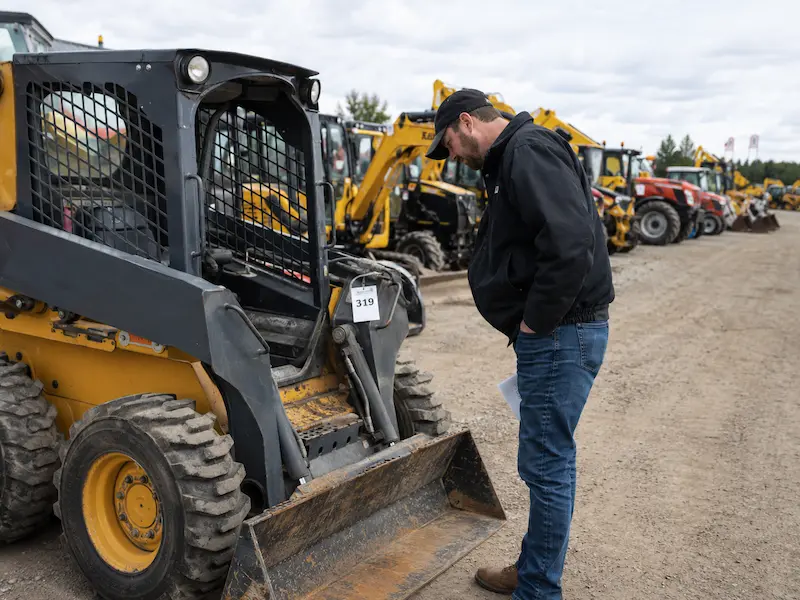
Financing equipment at an auction isn’t all that different from financing a direct purchase — but the timeline is compressed, and that changes everything.
Here’s the basic flow:
1. You identify equipment you want to bid on. Browse the auction listing, review photos and any available inspection reports, confirm the asset details (year, make, model, serial number), and set your maximum bid before you ever click “bid.”
2. You get pre-approved before the auction closes. This is the move that separates prepared buyers from those scrambling after the hammer falls. A pre-approval gives you a clear spending limit so you can bid confidently without overextending. It also means your lender is already familiar with your profile — which dramatically speeds up final funding.
3. You win the bid. The auction closes, you’re the high bidder. The platform sends an invoice with payment instructions, a deadline, and — in most cases — a buyer’s premium added on top of your winning bid.
4. You finalize financing and funds are disbursed. Your lender reviews the invoice, confirms the asset details, and wires funds directly to the auction company. Once funds clear, you can arrange pickup or transport.
The whole post-auction process can move in 24–48 hours when financing is already in place. Without it, you’re starting from scratch under the pressure of a payment deadline.
Auction purchases aren’t always treated identically to dealer purchases by lenders. A few things matter more in this context:
Clear title. Your lender will verify that the equipment has no existing liens before funding. Most reputable auction platforms handle lien searches as part of the sale process — but it’s worth confirming with the auction company before you bid. If liens exist, they typically need to be satisfied at closing before funds are released.
Asset condition and age. Lenders are generally comfortable financing equipment purchased at auction, but older machines or equipment without any inspection documentation can create friction. If the platform offers inspection reports, review them and have them ready. As a general rule: the newer and more documented the asset, the smoother the approval.
Full asset details. Year, make, model, and full serial number are required for any financing approval. Don’t bid on a listing that doesn’t include these — you’ll need them to close.
Seller verification. Auction companies are typically easy to verify, which works in your favor. Lenders are far more comfortable funding through an established auction platform than through an anonymous private-party sale.
Your business profile. Time in business, credit history, and cash flow documentation are still the primary drivers of approval. If you’ve been in business for two or more years and have solid financials, auction deals are very financeable. Startups and newer businesses can still get approved — lenders just look more closely at the deal structure. Our guide on how to get approved for equipment financing walks through exactly what lenders evaluate and the common mistakes that slow things down.
One thing that catches buyers off guard: auction fees are real, and they add up.
Most auction platforms charge a buyer’s premium — a percentage added on top of your winning bid that goes to the auction company. This is standard practice, and it’s not hidden, but it can easily get overlooked when you’re focused on the bid price.
If you bid $40,000 on a piece of equipment at an auction with a 10% buyer’s premium, your total payment obligation is $44,000 — and that’s before any applicable taxes or transport costs. Make sure your financing amount accounts for the full purchase price, buyer’s premium included.
Talk to your lender before bidding about whether the premium can be rolled into the financed amount. In most cases it can — as long as it’s reflected on the invoice.
The single most important thing you can do before bidding on auction equipment is get pre-approved.
Pre-approval doesn’t lock you into a specific purchase. It simply establishes your borrowing capacity so that when you find the right machine, you know exactly what you can spend — and your lender is already primed to move fast when you win.
For auction buyers, this matters for one straightforward reason: payment deadlines don’t care about your financing timeline. Most platforms require full payment within 24–72 hours. Starting the financing process after you win means scrambling to gather documents, wait for lender review, and hope everything clears before your deadline — a stressful and avoidable position.
Pre-approval flips that dynamic entirely. You bid with a clear number in mind, you win, you send the invoice to your lender, and funds move. That’s how buyers who consistently find deals at auction actually operate.
As we covered in our breakdown of equipment financing for online purchases, having your documentation ready — invoice, seller details, asset information, and basic business financials — is what separates deals that close in a day from deals that drag on for a week.
To move fast after you win, have the following ready before the auction closes:
• Business formation documents (LLC, EIN, etc.)
• 3-6 months of business bank statements
• Driver’s license for all applicants
• A rough idea of the asset(s) you’re targeting — year, make, model range, expected price
You don’t need the exact invoice yet — that comes after you win. But having your business documents organized in advance means your lender can move on your auction equipment financing before auction day and issue a pre-approval in hours, not days.
At TrueCore Capital, we work with buyers across multiple auction platforms — including our trusted partner Fastline Auctions — and we understand how time-sensitive the post-auction window really is. We can get you pre-qualified with no hard pull on your credit, so you know your buying power before you ever place a bid.
Whether you’re eyeing a tractor, a commercial truck, a skid steer, or a trailer, we’ll help you structure the deal correctly and move fast when the auction closes.
Ready to get pre-approved before your next auction? Call us at (805) 387-6823 or apply online — a specialist will reach out within 24 hours.
Sources:
• Mordor Intelligence, “Used Construction Equipment Market Size & Share Analysis – Growth Trends and Forecast (2026-2031),” [https://www.mordorintelligence.com/industry-reports/used-construction-equipment-market].
• AG Web, “Record-breaking Auction Prices Signal Scarcity in Top-end Used Machinery,” [https://www.agweb.com/news/machinery/record-breaking-auction-prices-signal-scarcity-top-end-used-machinery].



 July 5, 2024
 July 5, 2024
 July 5, 2024


 by Augustine Sung