
Starting a trucking business takes more than finding the right truck. For many new owners, the bigger question is whether they can get approved for financing before they have years of business revenue, established contracts, or a long track record under the company name.
That is where startup truck financing comes in.
Startup truck financing can help new businesses finance dump trucks, tow trucks, box trucks, trailers, semi trucks, service trucks, and other commercial vehicles. But it is important to be realistic: startup trucking deals are usually reviewed more carefully than deals for established companies.
In many cases, startups should expect to bring some type of down payment to the table. Depending on credit, bank strength, equipment type, and overall risk, that down payment may fall somewhere around 10% to 25%.
That does not mean startups cannot get approved. It just means the deal needs to make sense from a lender’s perspective.
Lenders like history. They want to see how long a business has been operating, how much revenue it produces, how it manages cash flow, and whether it has handled debt responsibly in the past.
Startup trucking businesses usually do not have all of that yet.
Because of that, lenders may look more closely at the applicant’s personal credit, bank balances, industry experience, down payment, equipment value, and how quickly the truck can start generating revenue.
The less history the business has, the more important the rest of the file becomes.
For example, a startup owner with strong personal credit, solid bank balances, prior trucking or construction experience, and 15% down may look much different than a brand-new operator with limited credit, thin banks, no industry experience, and no down payment.
The truck type also matters. Some trucks are easier for lenders to understand because they have stronger resale value, broader use cases, or clearer revenue potential.
One important detail for startup truck financing is the type of driving experience the applicant has.
Previous trucking experience can absolutely help, but lenders may view 1099 experience differently than traditional W-2 driver experience.
A W-2 company driver may have strong driving experience, but they were usually operating under another company’s structure. That company may have handled dispatching, insurance, authority, maintenance planning, customer relationships, billing, compliance, and overall business operations.
A 1099 driver, independent contractor, or owner-operator-style driver may have more direct experience managing the business side of trucking. The IRS explains the difference between employees and independent contractors based on the level of control and independence in the working relationship, which is one reason lenders may view 1099 experience differently than W-2 employment. That can include handling their own income, expenses, routes, maintenance, taxes, customers, or contract work.
In some cases, if an applicant has at least two years of 1099 trucking experience, that may help move the file out of the strict “startup” bucket from a lender’s perspective. The business entity may be new, but the borrower may be able to show real operating history and industry experience.
That does not guarantee approval, but it can make a meaningful difference.
For example, someone with two or more years of 1099 trucking experience, strong bank statements, clean credit, and money down may be viewed differently than someone who is buying their first truck with only W-2 driving experience and no independent operating history.
For startup truck financing, a down payment is common.
Some stronger startup applicants may be able to qualify with around 10% down, especially if they have good credit, strong banks, relevant experience, and are buying a clean truck from a reputable seller.
Other startups may need closer to 15% to 20% down if the business is brand new, the truck is used, the credit profile is average, or the bank statements are not especially strong.
In tougher files, lenders may look for 25% or more down, especially if the truck is older, higher mileage, bought from a private seller, or the applicant has weaker credit or limited experience.
A down payment helps lower the lender’s risk. It also shows that the buyer has real skin in the game, which matters when the business does not have much operating history yet.
Dump trucks can be financeable for startups, but lenders usually want to understand how the truck will be used.
A startup buying a dump truck for construction hauling, dirt work, demolition, landscaping, or local material hauling may have a stronger case if the owner has prior experience in those industries.
For dump truck financing, lenders may look at:
• Truck age and mileage
• Chassis and body condition
• Whether the truck is CDL or non-CDL
• Expected use and revenue source
• Credit strength
• Bank balances
• Down payment
Because dump trucks can be expensive and job-specific, startups should be prepared to explain how the truck will make money. If the buyer already has contractor relationships, prior hauling experience, or work lined up, that can help strengthen the file.
For more specific options, TrueCore Capital offers dump truck financing for business owners looking to purchase or upgrade commercial dump trucks.
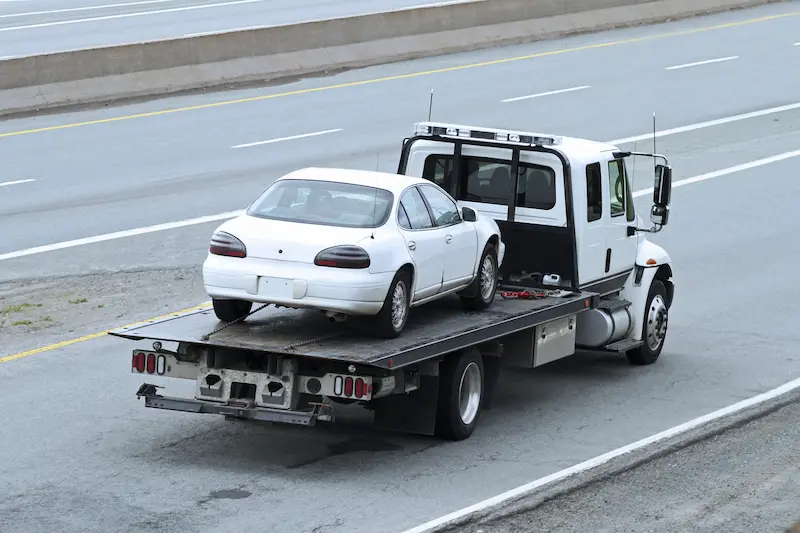
Tow truck financing for startups can be a little tougher depending on the unit and business model.
A startup buying a rollback, wrecker, repo truck, or heavy-duty tow truck may need to show strong credit, solid cash reserves, and a realistic plan for generating calls. Lenders may also look at whether the buyer has towing experience or existing relationships with repair shops, dealerships, roadside networks, body shops, or fleet operators.
Tow trucks can be specialized, so equipment condition matters. A clean rollback from a reputable seller may be easier to review than an older, high-mileage tow truck with limited documentation.
Startups should also be ready to show that they understand the operating costs involved, including insurance, fuel, maintenance, storage, dispatching, and local licensing requirements.
Box trucks are common for startup businesses because they can support delivery, moving, freight, logistics, furniture, appliance delivery, event work, and local service routes.
Because box trucks have a wide range of uses, lenders may want to know exactly how the truck will be used.
A startup with a delivery contract, route opportunity, moving business plan, or existing customer base may have a stronger case than someone buying a truck without a clear revenue plan.
For box truck financing, lenders may review:
• Mileage and condition
• GVWR and CDL
• Business use case
• Credit profile
• Bank strength
• Down payment amount
A newer box truck with clean documentation and a reasonable price may be easier to finance than an older unit with high mileage or unclear seller information.
Semi truck financing for startups is often one of the more difficult categories.
That does not mean approval is impossible, but lenders tend to be more cautious. Semi trucks can be expensive, operating costs are high, insurance can be costly, and new trucking authorities may still be building their revenue history.
Startup semi truck buyers may need stronger credit, stronger banks, more money down, or proof of industry experience.
This is where 1099 experience can matter. A borrower with two or more years of 1099 trucking experience may be able to show that they have already operated more independently, managed income and expenses, and understand what it takes to run freight. That can carry more weight than W-2 driving experience alone.
Lenders may also want to understand whether the applicant has a CDL, prior driving experience, operating authority, insurance, and a plan for finding freight. New motor carriers may also need to understand FMCSA registration requirements for new motor carriers before operating commercially.
For startups, the strongest semi truck financing files usually show that the buyer has experience in trucking and is not entering the industry completely blind.
Commercial trailers can be a good entry point for some startups, especially when paired with an existing truck or used to expand hauling capacity.
Lenders may finance flatbeds, dry vans, refrigerated trailers, dump trailers, enclosed trailers, utility trailers, and other commercial trailers. The strength of the deal depends on the trailer type, price, age, condition, and how it will be used.
Since trailers may cost less than trucks, some startup buyers may have an easier time qualifying compared to larger vehicle purchases. However, lenders still care about credit, cash flow, down payment, and whether the trailer supports a real business use.
If the trailer is part of a broader trucking or equipment setup, the lender may also want to understand what vehicle will pull it and how the business plans to generate revenue.
Service trucks and utility trucks can be strong business assets for contractors, mechanics, plumbers, electricians, HVAC companies, mobile repair businesses, and field service operators.
For startups, these trucks may be easier to explain when the owner already has trade experience.
For example, a diesel mechanic starting a mobile repair business may have a stronger story than someone with no background buying a fully upfitted service truck for the first time.
Lenders may look at:
• Industry experience
• Type of service body or upfit
• Mileage and condition
• Business plan
• Credit and bank strength
• Down payment
• Whether the truck is essential to generating revenue
When the truck is directly tied to the owner’s trade or service work, that can help the deal make more sense.
The strongest startup truck financing applications usually have a few things working in their favor.
Good personal credit helps. Strong bank balances help. Relevant industry experience helps. A reasonable truck price helps. A clean invoice, seller information, photos, specs, VIN, mileage, and equipment details also help lenders review the deal faster.
For trucking applicants, 1099 experience can also help separate a true first-time startup from someone who has already been operating in the industry. If the business name is new but the borrower has two or more years of 1099 trucking experience, lenders may have more to work with than they would for a completely new operator.
Startups should also avoid stretching too far too soon. Trying to finance the most expensive truck possible with minimal money down can make the deal harder to approve.
A better approach is to choose a truck that fits the business, supports revenue quickly, and leaves enough cash available for insurance, fuel, repairs, permits, and operating expenses. Before applying, new business owners should also think through startup costs, working capital, and how much cash they need to keep available after the truck purchase. The SBA’s guidance on business funding and loan options can be a helpful starting point for understanding how financing fits into a broader business plan.
Startup truck financing is possible, but it needs to be structured the right way.
For most new trucking businesses, that means being prepared for a down payment, usually somewhere around 10% to 25% depending on the strength of the file. Stronger credit, stronger bank balances, relevant experience, and a clean truck purchase can all improve the chances of approval.
The type of experience matters too. W-2 driving experience can help show that someone understands the road, but 1099 experience may carry more weight because it can show that the borrower has already handled more of the business side of trucking. In some cases, two or more years of 1099 experience may help move the applicant out of the strict startup category.
Different truck types are also reviewed differently. Dump trucks, tow trucks, box trucks, semi trucks, trailers, and service trucks each come with different risks, costs, and revenue models.
At TrueCore Capital, we help business owners explore commercial vehicle financing options based on the truck, the business, and the full picture behind the deal. Whether you are starting a new trucking business or adding your first commercial vehicle, our team can help you understand what lenders may look for before you move forward.
📞 Give us a call at Truecore Capital today at (805) 422-7342 or fill out a quick application below to discuss your startup truck financing needs and see how we may be able to help structure the right deal for your business.
Sources:
• IRS, “Independent contractor defined,” [https://www.irs.gov/businesses/small-businesses-self-employed/independent-contractor-defined].
• SBA, “Loans,” [https://www.sba.gov/funding-programs/loans].



 July 5, 2024
 July 5, 2024
 July 5, 2024


 by Augustine Sung