
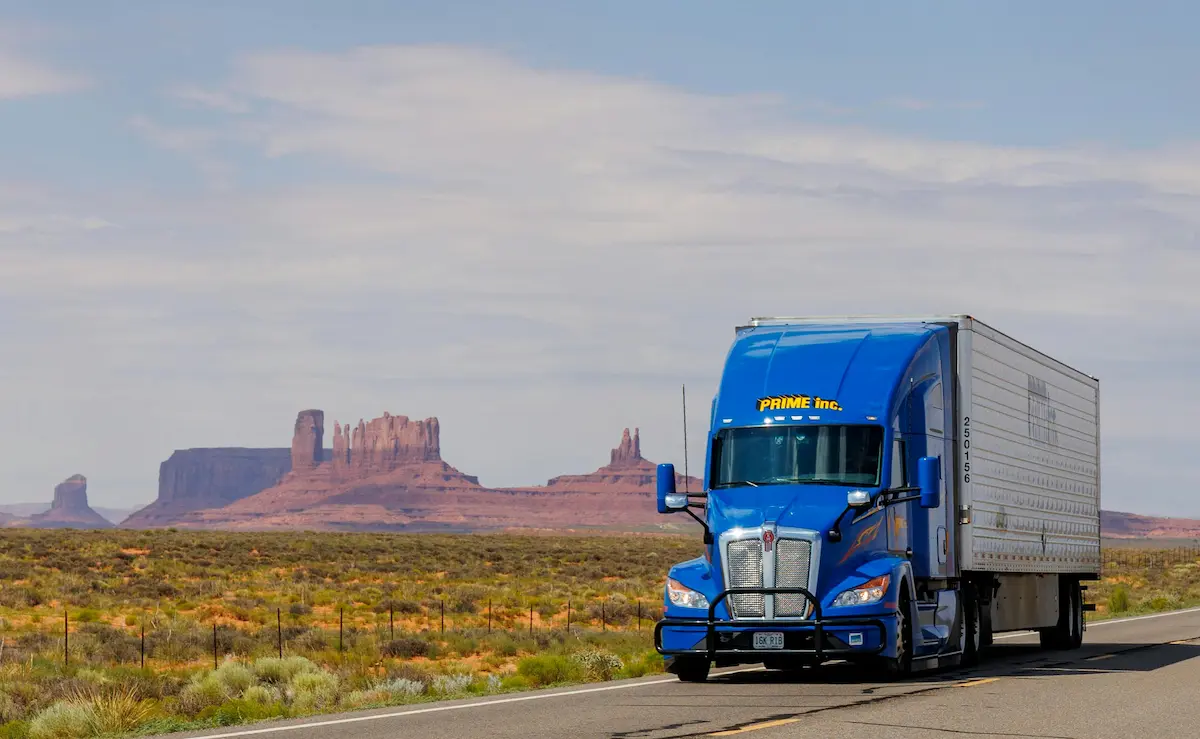
For businesses that rely on trailers to move equipment, materials, inventory, vehicles, or freight, one question comes up often: should you rent a commercial trailer when you need it, or does it make more sense to own one?
The answer depends on your workload, cash flow, growth plans, and how often the trailer will be used. Renting can be useful for short-term projects or seasonal demand, but ownership may offer stronger long-term value, better control, and potential tax advantages when structured properly.
For many businesses, commercial trailer financing can bridge the gap between needing equipment now and preserving working capital for daily operations. Instead of tying up a large amount of cash upfront, financing allows companies to acquire the trailer they need while spreading payments over time.
Before making a decision, it helps to understand the real differences between renting and owning — especially as year-end tax planning becomes part of the conversation.
Renting a commercial trailer can be a practical option when the need is temporary. If your business only needs a trailer for a short-term job, a busy season, or a one-off project, renting may help you avoid taking on a long-term payment.
Renting can also make sense when you are testing a new line of work and are not yet sure whether the trailer will be used consistently. For example, a contractor taking on a temporary hauling project may not want to commit to purchasing a dump trailer or flatbed until that type of work becomes a steady part of the business.
The main advantage is flexibility. You use the trailer when you need it, return it when you are done, and avoid long-term ownership responsibilities.
However, renting has limits. Availability can be inconsistent, rental costs can add up quickly, and you may not always get the exact trailer type or configuration your business needs. Over time, repeated rentals can become more expensive than financing and owning the asset.
Owning a commercial trailer gives your business more control. The trailer is available when you need it, configured for your work, and ready to support daily operations without depending on rental inventory.
This can be especially important for businesses that rely on trailers regularly, including construction companies, landscapers, haulers, equipment dealers, agricultural operations, freight businesses, and service companies.
Ownership also allows your business to build long-term asset value. Instead of making repeated rental payments with no equity, your payments go toward a trailer your company can continue using, trade in, or sell later.
That is where commercial trailer financing can become a strong option. With the right structure, businesses can acquire dry vans, flatbeds, reefers, dump trailers, lowboys, equipment trailers, and specialty trailers without draining cash reserves all at once.
Check out our page on commercial trailer financing to compare some options and get more info.
One of the biggest reasons businesses consider buying or financing equipment near the end of the year is the potential tax benefit.
In many cases, commercial trailers used for business may qualify as depreciable business property. That means the business may be able to deduct some or all of the cost over time, depending on the tax structure, purchase date, business use, and current IRS rules.
The IRS explains depreciation rules for business property in its guidance on how to depreciate property, including Section 179 deduction limits and depreciation methods. For tax years beginning in 2026, the IRS lists a Section 179 maximum deduction of $2,560,000, reduced when qualifying property placed in service exceeds $4,090,000.
For 2025, the maximum Section 179 deduction was listed at $2,500,000, with phase-out beginning once qualifying property placed in service exceeded $4,000,000.
That does not mean every business automatically qualifies for the full deduction. Section 179 has requirements, limits, and business-use rules, and businesses should always speak with a qualified tax professional before making a purchase based on expected tax savings.
Still, for companies already planning to acquire a trailer, timing can matter. A trailer generally needs to be purchased and placed in service during the tax year to potentially qualify for that year’s deduction.
When comparing renting vs. owning, taxes can be one of the biggest differences.
Rental payments may be deductible as business expenses, depending on how the trailer is used and how the rental is structured. But owning or financing a trailer may open the door to depreciation-related deductions, including Section 179 or bonus depreciation when the asset qualifies.
Bonus depreciation rules have changed in recent years, so this is another area where businesses should lean on their CPA. Recent tax updates restored 100% bonus depreciation for certain qualified property acquired and placed in service after January 19, 2025, according to tax and business reporting on the change.
For business owners, the key point is simple: if you are already planning to add a commercial trailer, owning it may provide tax-planning opportunities that renting does not offer in the same way.
This is not about buying equipment just to chase a deduction. It is about making sure that if your business needs the trailer anyway, you structure the acquisition in a way that supports cash flow, operations, and potential tax efficiency.
Cash flow is usually the deciding factor.
Renting may seem cheaper because there is no long-term commitment, but frequent rentals can become expensive. If your business rents trailers multiple times per month or keeps extending rental periods, those payments may start looking very similar to a monthly finance payment — except you still do not own the trailer.
With commercial trailer financing, businesses may be able to spread the cost over predictable monthly payments while keeping cash available for payroll, fuel, insurance, permits, inventory, repairs, and other operating expenses.
This is especially valuable for businesses that need the trailer to generate revenue. If the trailer helps your company complete more jobs, haul more equipment, deliver more inventory, or serve more customers, ownership may support growth more effectively than renting.
For broader financing options, you can also check out Truecore Capital’s equipment financing page.
Renting is not always the wrong move. In some cases, it may be the smarter option.
Renting may make sense if:
• You only need the trailer for a short-term project.
• You are unsure whether the trailer type fits your business long term.
• Your current cash flow cannot support another monthly payment.
• You do not want to manage maintenance, storage, insurance, or registration.
• You need a specialized trailer for one specific job.
In these cases, renting can give your business flexibility without adding long-term responsibility.
Owning or financing may make more sense if the trailer will be used consistently.
Ownership may be the stronger move if:
• Your business uses trailers weekly or daily.
• Rental costs are becoming a recurring expense.
• You need a specific size, configuration, or trailer type.
• You want the trailer available without waiting on rental inventory.
• The trailer will directly support revenue-producing work.
• You want to explore potential year-end tax deductions.
• You want to build equity in the asset instead of paying ongoing rental fees.
For companies with steady trailer needs, commercial trailer financing can turn a major equipment purchase into a manageable monthly expense.

Commercial trailers come in many forms, and the right financing structure depends on the asset, business profile, credit strength, and how the trailer will be used.
Common trailer types include:
• Dry van trailers
• Refrigerated trailers
• Flatbed trailers
• Dump trailers
• Lowboy trailers
• Equipment trailers
• Gooseneck trailers
• Utility trailers
• Livestock trailers
• Grain trailers
• Live bottom trailers
• Specialty and custom trailers
Whether your business is hauling materials, transporting equipment, moving freight, or supporting field operations, the right trailer can become a core part of your revenue engine.
Renting can be useful when your need is temporary. But if your business relies on trailers regularly, ownership may offer more control, stronger long-term value, and potential tax advantages.
With the right commercial trailer financing structure, your business can acquire the trailer it needs without draining working capital upfront. That can be especially helpful near year-end, when companies are reviewing profits, tax planning, and equipment needs for the year ahead.
Before making a decision, review your expected usage, monthly rental costs, available cash flow, and tax situation with your accountant. If the trailer will help your business operate more efficiently or take on more work, financing may be the smarter long-term move.
Thinking about adding a trailer before year-end?
Truecore Capital helps businesses secure flexible financing for commercial trailers, trucks, and heavy equipment. Whether you are buying new or used, upgrading from rentals, or planning around year-end equipment needs, our team can help you compare options and structure a financing solution that fits your business.
📞 Give us a call at Truecore Capital today at (805) 422-7342 or fill out a quick application below to discuss your commercial trailer financing needs and see how we may be able to help structure the right deal for your business.
Sources:
• IRS, “Publication 946 (2025), How To Depreciate Property, [https://www.irs.gov/publications/p946].
• Investopedia, “A New Tax Break For Business Owners Could Deliver Big Savings,” [https://www.investopedia.com/are-you-a-business-owner-this-tax-change-could-help-you-save-significantly-more-when-you-file-11891236].



 July 5, 2024
 July 5, 2024
 July 5, 2024


 by Augustine Sung